Swedish Players Shift Toward Blockchain-Verified Slot Mechanics Under Licensing Rules
Riley Günther · Aug 29, 2026

Swedish Players Shift Toward Blockchain-Verified Slot Mechanics Under Licensing Rules
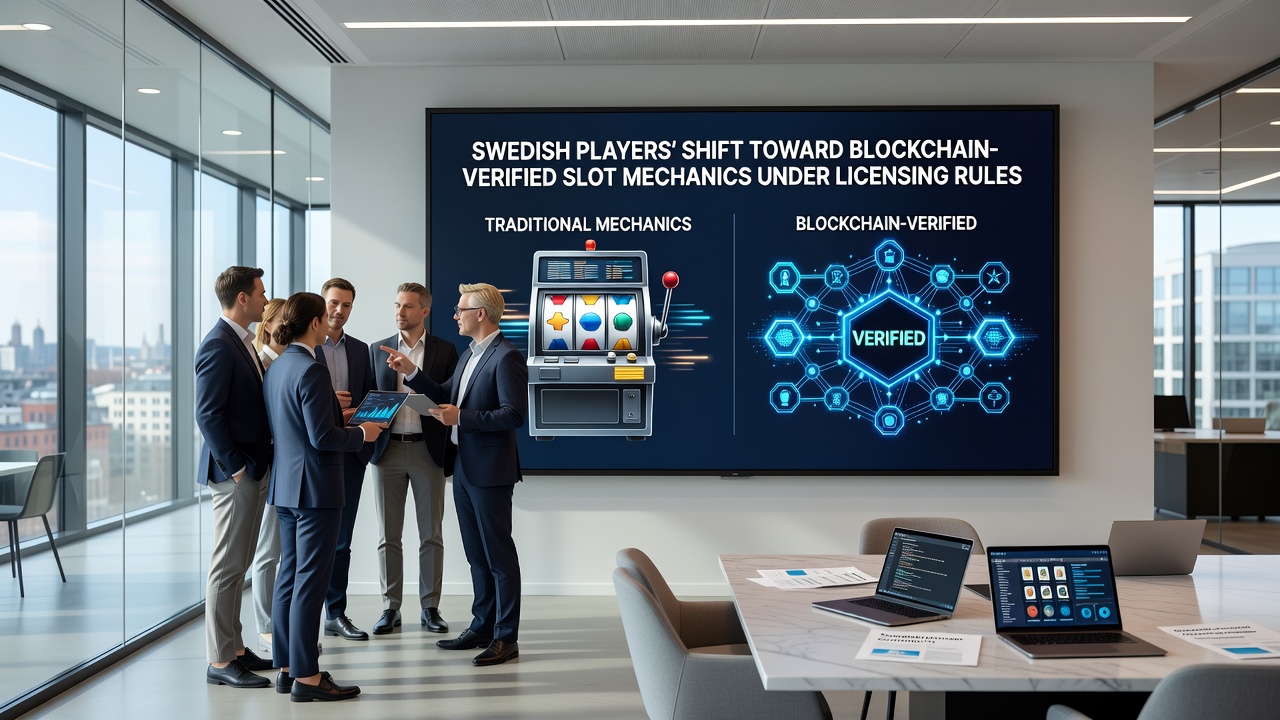
Swedish gambling operators have integrated blockchain technology into slot mechanics as licensing requirements from Spelinspektionen emphasize verifiable random number generation and transaction transparency, and data from regulatory filings shows increased player activity on these platforms through the first half of 2026.
Operators must demonstrate that each spin outcome remains independently auditable while complying with rules that took effect in prior years, yet updates in enforcement practices during August 2026 prompted several licensed sites to accelerate adoption of distributed ledger systems for recording game results adn payouts.
Regulatory Framework Driving Adoption
Spelinspektionen maintains oversight of all licensed online casinos operating in Sweden, and its guidelines require proof that slot mechanics deliver fair outcomes without external interference, which has led multiple providers to adopt blockchain-based verification tools that log every result on an immutable chain accessible for audits.
These systems allow third-party examiners to confirm game integrity by reviewing timestamped blocks rather than relying solely on internal server logs, and figures released by the authority indicate that by mid-2026 more than 35 percent of active slot titles on licensed Swedish sites incorporated some form of blockchain verification.
Operators report that players who previously migrated to unlicensed platforms now return once they can access real-time proof of fairness through public explorers linked to each game session, while the same licensing conditions prohibit any alteration of game parameters after initial certification.
Player Behavior and Platform Changes
Analytics shared by several major operators reveal steady growth in sessions involving blockchain-verified slots, particularly among users aged 25 to 44 who actively check transaction hashes before placing larger bets, and this pattern emerged clearly after the authority issued clarification notices in early 2026 regarding acceptable verification methods.
Many sites now display a small icon next to each qualifying game that links directly to the corresponding blockchain entry, allowing players to verify outcomes without leaving the interface, and this feature has coincided wth higher retention rates on platforms that implemented the change ahead of the August 2026 compliance deadline.
Technical Implementation Across Licensed Sites
Developers integrate smart contracts that automatically record bet amounts, reel positions, and payout calculations onto permissioned or public blockchains, and these contracts undergo review during the licensing process to ensure they cannot be modified post-deployment.
Some operators combine on-chain verification with traditional random number generators certified by independent labs, creating a hybrid model that satisfies both speed requirements for gameplay and the transparency demands embedded in Swedish licensing rules, while others have shifted entirely to on-chain generation for specific titles.
Industry reports note that transaction costs associated with blockchain writes have decreased enough by 2026 to make real-time logging feasible even for high-volume slot games, and several providers have published case studies detailing how their systems handle peak traffic without introducing delays.
Impact on Game Development and Certification
Game studios supplying the Swedish market now design slot mechanics with built-in blockchain hooks from the initial coding stage, and certification bodies have updated their testing protocols to include verification of ledger entries alongside standard mathematical fairness checks.
According to Spelinspektionen documentation, any new slot title submitted after January 2026 must include documentation showing how outcome data will be stored and made available for review, which has prompted studios to standardize blockchain integration across multiple jurisdictions.
European trade associations have tracked similar requirements appearing in neighboring markets, yet Swedish rules remain among the most explicit regarding public verifiability of individual spins, and this distinction continues to shape development priorities for studios targeting Nordic operators.
Future Outlook Under Current Licensing Rules
Additional guidance expected from Spelinspektionen later in 2026 may expand the categories of data that must appear on-chain, potentially including player balance changes and bonus trigger events, and early consultations suggest operators are already preparing infrastructure adjustments.
Research from Nordic gaming studies indicates that transparent verification mechanisms correlate with longer average session times on regulated platforms, and licensed operators continue to monitor whether these patterns persist as more titles adopt full blockchain recording.
Conclusion
The combination of existing licensing obligations and evolving enforcement practices has produced measurable movement toward blockchain-verified slot mechanics among Swedish players, and ongoing regulatory updates through 2026 are expected to reinforce this direction without altering the core requirement that all activity remains confined to licensed channels.